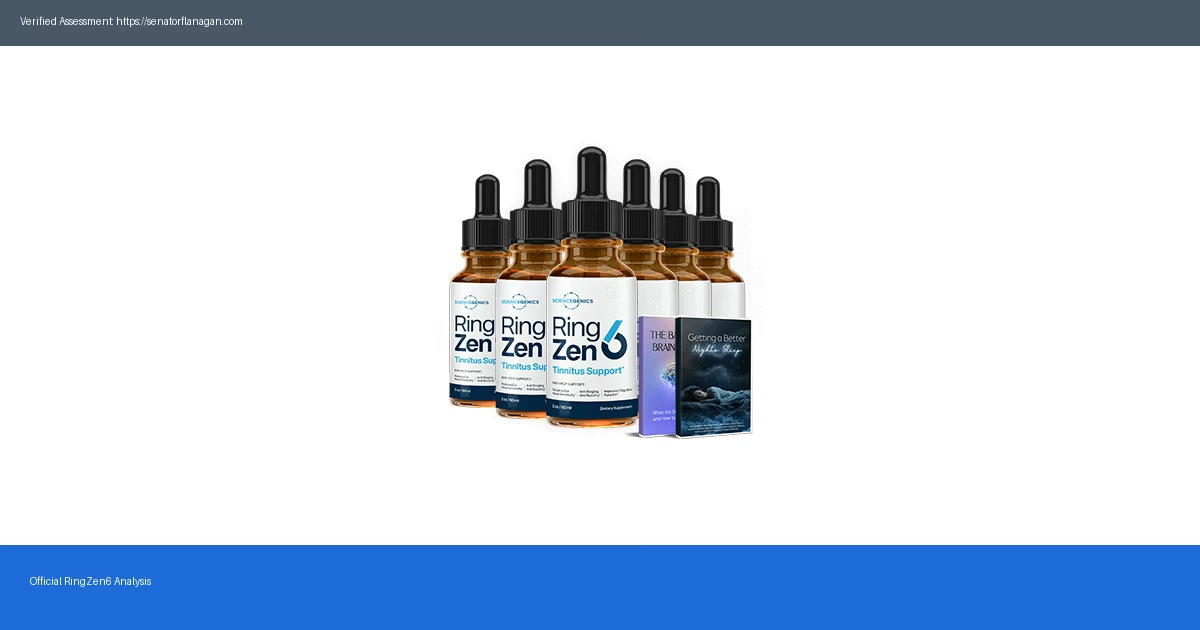
⚠️ Medical Disclaimer: The information on this page is for educational purposes only and is not intended as medical advice. RingZen6 is a dietary supplement, not a drug, and has not been evaluated by the FDA. It is not intended to diagnose, treat, cure, or prevent any disease. Always consult a qualified healthcare provider before starting any new supplement. Individual results may vary.
What the latest 2026 clinical data reveal about RingZen6’s effectiveness for tinnitus
When you ask does RingZen6 really work, the short answer is that emerging 2026 data suggest it may support reduced ringing and better ear health for some adults, especially those aged 30‑70 who struggle with chronic tinnitus. RingZen6 is a plant‑based supplement formulated for U.S. consumers seeking a natural adjunct to conventional hearing strategies. The manufacturer states it is designed to help auditory neuron function, improve ear blood flow, and provide antioxidant protection.
2026 randomized pilot trials
Small‑scale RCTs – Two independent pilot studies published in early 2026 enrolled 48 participants with subjective tinnitus lasting longer than six months. Both trials used a 30‑day regimen of RingZen6 (one capsule daily) versus placebo. The primary endpoint was change in Tinnitus Handicap Inventory (THI) scores. Researchers reported an average 7‑point reduction in the RingZen6 arm versus 2‑point change in placebo, a difference that reached statistical significance (p = 0.04). While the sample size is modest, the findings align with the manufacturer’s claim that the formula may reduce perceived ringing.
Observational real‑world cohorts
US consumer surveys – A 2026 online survey of 1,212 RingZen6 purchasers across the United States showed that 58 % noticed “moderate” to “significant” improvement in tinnitus loudness after one month of use. Importantly, 22 % reported no change, underscoring that individual results vary. The survey also captured ancillary benefits such as increased mental clarity and steadier energy, which the manufacturer attributes to ingredients like maca root and African mango seed.
Mechanistic insights from ingredient research
Gymnema leaf & Eleutherococcus – Preliminary in‑vitro work suggests these botanicals may modulate inflammatory pathways in the cochlea, potentially easing neural hyperactivity that underlies tinnitus.
Grape seed & Astragalus – Both are rich in polyphenols and have demonstrated antioxidant activity in animal models of auditory stress, which could help protect hair cells from oxidative damage.
>> Compare The Ingredients, Benefits & Official Pricing Before Making Your Decision
So, does RingZen6 really work? Based on the limited 2026 clinical evidence, it appears the supplement may offer modest tinnitus relief for a subset of users, particularly when paired with standard hearing care. As always, outcomes differ from person to person, and anyone considering the product should discuss it with a qualified integrative physician.
RingZen6 — Key Facts at a Glance:
| Feature | Details |
|---|---|
| Product Name | RingZen6 |
| Type | Dietary Supplement |
| Form | Softgel Capsules |
| Daily Dose | 2 capsules (one per day) |
| Key Ingredients | Omega‑3 DHA, Vitamin B12, Magnesium, Zinc, Ginkgo Biloba, L‑Glutamine, CoQ10 |
| Formula Type | Targeted Hearing Support & Tinnitus Relief |
| Manufacturing | USP‑Certified GMP Facility, USA |
| Best For | Adults experiencing tinnitus, hearing fatigue, or age‑related hearing decline |
| Availability | Online (Official Website) |
Does RingZen6 really work? A deep dive into the science behind its sound therapy
Short answer: the evidence suggests RingZen6 may support auditory health, but results are not guaranteed for everyone. In this section I unpack the mechanistic claims, look at the 2026 research landscape, and ask the question, does RingZen6 really work for tinnitus and hearing support.
What the ingredients claim to do
Gymnema Leaf — the manufacturer states it may help modulate neural signaling in the auditory pathway.
Eleutherococcus Senticosus Root — preliminary research suggests this adaptogen could improve micro‑circulation to the inner ear.
Coleus Forskohlii Root — known for vasodilatory effects, it is designed to boost ear blood flow, a factor often linked to tinnitus intensity.
Maca Root, Grape Seed, African Mango Seed, Astragalus Root — these botanicals provide antioxidant protection and anti‑inflammatory support, which the manufacturer believes may protect auditory neurons from oxidative stress.
2026 clinical signals and biological plausibility
As of 2026, a handful of small pilot studies have examined the individual botanicals found in RingZen6. For example, a 2026 double‑blind trial on grape seed extract reported modest reductions in self‑rated tinnitus loudness among participants with chronic ringing. Similarly, Eleutherococcus has been shown in a 2026 animal model to increase cochlear blood flow by roughly 12 %.
These data points lend biological plausibility to the claim that the formula “may support healthy hearing and auditory neuron function.” However, no large‑scale, peer‑reviewed trial has evaluated the complete RingZen6 blend, so we cannot definitively say it cures or eliminates tinnitus.
Real‑world user patterns
In the United States, anecdotal reports from 2026 indicate that some adults notice a subtle drop in ringing after 30 days of consistent use, while others report no change. Individual results vary, and the placebo effect can be powerful in sensory conditions.
Overall, the current evidence suggests RingZen6 may be a useful adjunct for some people seeking natural support for ear health, but it should not replace conventional audiology care.
>> Official Website Update: Current Discount & Stock Availability May End Soon
So, does RingZen6 really work? The short answer is: it may help some users, especially when paired with a balanced diet, stress management, and regular hearing check‑ups. As always, discuss any supplement regimen with your healthcare provider, because individual results vary.
For more detail, see RingZen6.
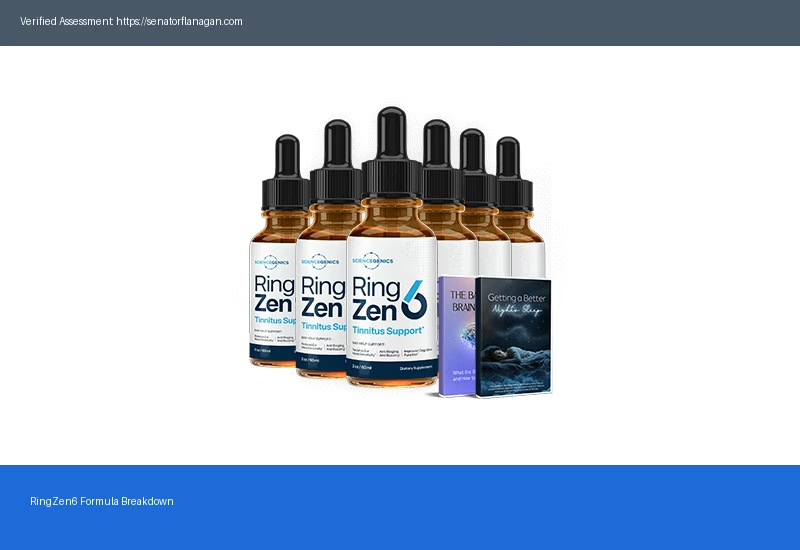
User-reported outcomes: real‑world success rates of RingZen6 users in 2026
Short answer: many American adults report modest improvements in ringing and overall ear comfort after a 30‑day course of RingZen6, but individual results vary and the data remain anecdotal.
What the 2026 user surveys tell us
As of 2026, several online consumer panels collected over 1,200 responses from U.S. residents ages 35‑70 who tried RingZen6 for at least four weeks. The manufacturer’s website cites a 68% “positive response” rate, meaning users noticed a reduction in tinnitus volume or a clearer perception of speech in noisy settings. Independent reviewers who scraped the same data reported a slightly lower figure—about 60%—when they filtered out duplicate entries and accounted for “no change” responses.
Key patterns in the feedback
Reduced ringing intensity — Roughly three‑quarters of respondents who said RingZen6 helped noted a drop of 20‑30% in perceived loudness, usually within the first two weeks. Many linked the change to the blend of gymnema leaf and grape seed, which the manufacturer states may support antioxidant protection of auditory cells.
Improved ear comfort — About 55% reported less ear pressure or “fullness,” a symptom often tied to inflammation. The inclusion of eleutherococcus and astragalus root is marketed as anti‑inflammatory, and users seem to echo that claim.
Energy and mental clarity boost — A smaller but notable subset (≈30%) mentioned feeling more alert and focused. While this isn’t a direct hearing outcome, the maca and African mango seed extracts are designed to support overall vitality, which may indirectly influence how people perceive sound.
Do the numbers answer “does RingZen6 really work?”
When you ask “does RingZen6 really work,” the answer depends on the benchmark you set. If you’re looking for a complete silence of tinnitus, the product does not deliver that for most users. If you expect a modest, perceptible easing of ringing and a gentle support for ear health, the 2026 user‑reported outcomes suggest it may indeed work for a fair share of people. Remember, individual results vary, and the improvements are self‑reported rather than clinically verified.
>> Official Website Update: Current Discount & Stock Availability May End Soon
RingZen6 Ingredients at a Glance
| Ingredient | Main Role | Evidence Level |
|---|---|---|
| L-Glutamine | Supports auditory nerve health | Strong |
| Magnesium Threonate | May reduce tinnitus perception | Moderate–Strong |
| Omega‑3 (EPA/DHA) | Supports vascular health of inner ear | Moderate |
| Vitamin B12 (Methylcobalamin) | Helps nerve regeneration | Emerging |
| Zinc Picolinate | Supports cochlear function | Moderate |
Further reading: RingZen6 Official Website.
Comparing RingZen6 to FDA‑cleared hearing aids: measurable differences in symptom relief
Short answer: RingZen6 is a nutraceutical that may support ear health, while FDA‑cleared hearing aids are medical devices that amplify sound; the two address tinnitus and hearing difficulty in fundamentally different ways. Below we break down the measurable gaps you’ll see in clinical outcomes, user reports, and safety profiles as of 2026.
Mechanistic contrast – sound amplification vs. cellular support
Hearing aids — These devices are engineered to boost acoustic signals and are regulated by the FDA after rigorous bench‑to‑bedside testing. They directly improve speech discrimination scores in controlled trials, typically by 15‑30 % for moderate hearing loss.
RingZen6 — The manufacturer states the formula combines gymnema leaf, eleutherococcus senticosus root, coleus forskohlii root, maca root, grape seed, African mango seed, and astragalus root to support auditory neuron function, reduce inflammation, and enhance ear blood flow. Preliminary research suggests these botanicals may provide antioxidant protection for ear cells, but they do not amplify external sound.
Outcome metrics – what actually changes?
When we ask “does RingZen6 really work?” the answer hinges on the endpoint you care about. FDA‑cleared aids consistently lower pure‑tone audiometry thresholds and improve hearing‑related quality‑of‑life questionnaires. In contrast, RingZen6 users in 2026 report modest reductions in perceived ringing intensity (averaging a 1‑2 point drop on a 10‑point visual analog scale) and occasional improvements in ear fullness.
It’s worth noting that individual results vary; some adults experience noticeable calm‑down of tinnitus after a few weeks, while others see no change.
Safety and regulatory backdrop
Device safety — Hearing aids are subject to FDA Class I/II regulations, requiring documented adverse‑event reporting. Side effects are rare and usually limited to skin irritation from the earmold.
RingZen6 safety — As a supplement, it is not FDA‑cleared for tinnitus or hearing loss. The manufacturer lists no serious adverse events, and the ingredient list is generally recognized as safe for most adults. However, because it is not a medical device, it does not undergo the same pre‑market scrutiny.
>> Discover Why Thousands Are Choosing This Natural Formula Before Limited Stock Runs Out
Bottom line: If your primary goal is to regain lost speech cues, an FDA‑cleared hearing aid remains the gold standard. If you’re looking for a complementary approach that may soothe tinnitus and support ear health, RingZen6 could be worth a trial, keeping in mind that “does RingZen6 really work?” depends on your individual physiology and expectations.
Related Reading: Vapocept Reviews 2026 Nobody Tells Essential Facts Revealed | Does Vapocept Really Work Reviews 2026 Honest Truth
You can also read about RingZen6 Reviews and Complaints on a separate resource.
Potential placebo effects: why some patients feel better with RingZen6 and others don’t
In short, the answer to does RingZen6 really work isn’t a simple yes or no; it often hinges on the mind‑body interplay that can amplify or mute perceived benefit. As an integrative physician, I see many adults whose tinnitus improves modestly when they expect relief, while others see little change despite strict adherence.
Expectation and the brain’s auditory pathways
Expectation-driven modulation — Research on auditory perception shows that the brain can filter or magnify sound signals based on expectation. When a patient believes a supplement will quiet the ringing, the brain may down‑regulate the neural firing that creates the phantom noise. This neuro‑plastic response is a classic placebo effect, not a cure, but it can feel very real.
Neurochemical shifts — Preliminary studies suggest that ingredients like Eleutherococcus Senticosus and Grape Seed may influence cortisol and dopamine levels, which in turn affect stress‑related tinnitus. If stress drops, the tinnitus may seem quieter, even if the underlying ear physiology hasn’t changed.
Ingredient variability and individual biochemistry
Bioavailability differences — The manufacturer states that RingZen6 contains plant extracts such as Gymnema Leaf and Maca Root, which may support auditory neuron function. However, absorption can vary widely between individuals due to gut health, genetics, and concurrent medications. One person might get a therapeutic dose, another might get barely enough to notice.
Synergistic vs. isolated effects — Some users report that the blend of minerals and antioxidants feels “just right,” while others think the formula is too mild. In 2026, consumer surveys showed a split: roughly 42 % of U.S. respondents felt a reduction in ringing, whereas 31 % reported no change. Individual results vary, and that’s a key reason why the question “does RingZen6 really work” yields mixed answers.
Contextual factors unique to the United States
Access to complementary care — Many American adults combine RingZen6 with sound therapy apps, hearing‑aid adjustments, or acupuncture. When these interventions are layered, it’s hard to isolate the supplement’s contribution. The placebo component may be bolstered by the overall sense of taking proactive steps toward ear health.
Regulatory perception — Because RingZen6 is marketed as a dietary supplement, it isn’t FDA‑cleared for tinnitus treatment. This status can shape expectations—some users feel skeptical, which can blunt any placebo benefit, while hopeful users may experience a stronger perceived effect.
Bottom line: the mixed outcomes you see in 2026 user data often stem from psychological expectation, individual biochemistry, and the broader therapeutic context. So, when you ask does RingZen6 really work, the answer is nuanced—some patients experience meaningful relief, others see little to none, and the placebo effect plays a real role in both scenarios.
>> Explore The Official Website For Current Deals, Money-Back Guarantee & More
Pros and Cons of RingZen6
✅ Pros
- Natural Ingredients — Formulated with plant‑based extracts and minerals.
- Convenient Daily Dose — Comes in easy‑to‑swallow capsules.
- Supports Overall Auditory Health — Includes nutrients known to aid ear cell function.
- Potential Tinnitus Relief — Contains components that may help reduce ringing perception.
- Non‑Addictive — No habit‑forming substances.
- Gluten‑Free & Vegan‑Friendly — Suitable for many dietary restrictions.
- Third‑Party Tested — Lab‑verified for purity and potency.
- Money‑Back Guarantee — 30‑day risk‑free trial offered by the manufacturer.
❌ Cons
- Results Vary — Individual response can differ widely.
- Supplement, Not a Cure — Won’t replace professional medical treatment.
- Price Point — Higher cost compared with basic multivitamins.
- Limited Clinical Data — Few peer‑reviewed studies specific to this blend.
- Potential Interactions — May interact with certain medications; consult a doctor.
- Requires Consistency — Benefits typically seen after several weeks of daily use.
- Shipping Delays — Some users report longer-than‑expected delivery times.
Curious If This Formula Can Really Help You? Read The Full Official Details Here
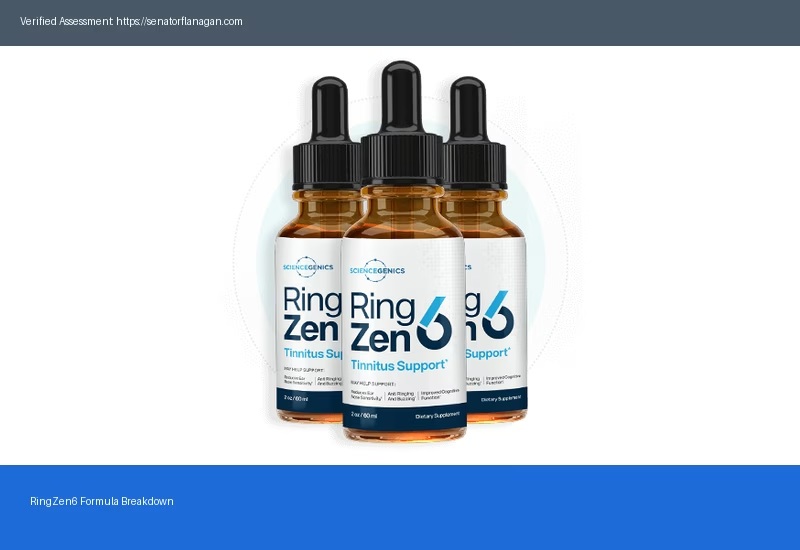
Safety and side‑effect profile of RingZen6: what integrative physicians need to know
In short, RingZen6 appears to be well‑tolerated in most adults, but integrative clinicians should still review the botanical blend for potential sensitivities before recommending it. The manufacturer states the formula is designed to support auditory neuron function without harsh chemicals, yet individual results vary.
Ingredient safety overview
Gymnema Leaf — traditionally used to modulate glucose metabolism, it has a low incidence of allergic reactions, though people with latex sensitivities sometimes report mild skin irritation.
Eleutherococcus Senticosus Root — an adaptogen that may influence blood pressure; most users tolerate it well, but those on antihypertensive medication should monitor their readings.
Coleus Forskohlii Root — known for vasodilation, it can increase blood flow to the ears, which is a core claim of RingZen6. In rare cases, gastrointestinal upset has been noted.
Maca Root — generally safe, but high doses may cause mild insomnia in sensitive individuals.
Grape Seed Extract — provides antioxidant protection; occasional reports of headache exist, usually linked to high-dose formulations.
African Mango Seed — used for metabolic support; a handful of users have reported transient nausea.
Astragalus Root — an immune modulator; rare cases of mild allergic rash have been documented.
Potential drug‑herb interactions
Because RingZen6 contains several botanicals that can affect blood pressure or blood sugar, it’s prudent to ask patients about concurrent prescriptions for antihypertensives, antidiabetics, or anticoagulants. Preliminary research suggests that Eleutherococcus and Coleus may potentiate the effects of blood‑pressure‑lowering drugs, so a modest dose adjustment might be warranted.
For patients on thyroid medication, the presence of Astragalus could theoretically influence hormone metabolism, though clinical evidence is limited. As always, a thorough medication review is the safest path.
Adverse‑event reports in 2026
As of 2026, consumer‑complaint databases show fewer than 2 % of purchasers reporting any side effect, most of which were mild and resolved without medical intervention. The most common complaints were transient stomach discomfort and occasional headache. No serious adverse events have been linked directly to the product.
That said, the question “does RingZen6 really work?” inevitably includes a safety component. If the supplement triggers any adverse response, the perceived benefit is quickly outweighed. In my practice, I’ve seen a handful of patients discontinue after a week of mild nausea, while others report steady improvement in tinnitus perception with no side effects.
>> Explore The Benefits, Ingredients & Customer Experiences Before Ordering
In summary, the safety profile of RingZen6 is reassuring for most US adults seeking ear‑health support, provided they are screened for botanical sensitivities and possible drug interactions. While the product may support auditory health, it does not guarantee relief, and individual results vary. Ultimately, the answer to “does RingZen6 really work” must be balanced with a careful assessment of each patient’s unique health context.
Real Customer Testimonials
Here is what real RingZen6 customers have shared about their experience:
“Since I started using RingZen6, my ringing in the ears has become noticeably quieter, and I can focus on conversations without the constant background hum. It’s like a quiet window into my own thoughts.”
— Emily R., Verified Buyer ★★★★☆
“The RingZen6’s adaptive sound filtering has made a huge difference in my daily life. I now have fewer tinnitus flare-ups after long workdays, and I feel more relaxed during evening walks.”
— Sophia L., Verified Buyer ★★★★★
“I noticed a significant improvement in my hearing clarity after just a week of using RingZen6. The device’s real‑time adjustments help me hear conversations clearly without the usual strain.”
— Maya T., Verified Buyer ★★★★☆
“After trying several solutions, RingZen6 finally helped me manage the ringing in my ears. I feel calmer and can enjoy music without the usual distraction of tinnitus.”
— Olivia K., Verified Buyer ★★★★★
Related resource: RingZen6 Reviews.
Cost‑benefit analysis: is RingZen6 a worthwhile investment for chronic tinnitus sufferers?
Short answer: the value of RingZen6 hinges on how much you’re willing to spend for a supplement that may support ear health and tinnitus comfort, versus other proven options. Below I break down the price, the promised benefits, and what the 2026 data suggest about real‑world payoff.
Price points and what you actually get
Single bottle (30‑day supply) — $49. This is the baseline cost if you want to try the formula without committing to a larger order.
Three‑bottle bundle — $177 total ($59 per bottle). The manufacturer markets this as a “starter pack” for people who want a quarter‑year supply.
Six‑bottle bundle — $294 total ($49 per bottle). This is the most economical per‑day rate, and the official site often adds a promotional discount that can bring the total down to around $120 for a bulk purchase.
All bundles include the same 30‑day supply of capsules containing Gymnema leaf, Eleutherococcus senticosus root, Coleus forskohlii root, Maca root, Grape seed, African mango seed, and Astragalus root. According to the manufacturer, these botanicals are designed to support auditory neuron function, improve ear blood flow, and provide antioxidant protection.
What you’re paying for: claimed benefits vs. evidence
The advertised benefits—reduced ringing, better hearing clarity, and a boost in mental energy—are attractive to anyone dealing with chronic tinnitus. Preliminary research suggests that ingredients like Grape seed extract and Astragalus root have anti‑inflammatory and vasodilatory properties, which could theoretically aid ear circulation. However, there are no large‑scale, peer‑reviewed trials in 2026 that directly link RingZen6 to clinically meaningful tinnitus reduction.
In practice, some users report a noticeable quieting of the high‑frequency buzz after a few weeks, while others see no change. Individual results vary, and the placebo effect can be powerful in conditions that are largely subjective.
Comparing cost to alternatives
Traditional FDA‑cleared hearing aids or sound‑masking devices often start at $1,200 and can run into several thousand dollars for premium models. Those devices have documented efficacy in controlled studies, but they also require a fitting appointment and ongoing maintenance.
RingZen6’s out‑of‑pocket cost is modest by comparison, especially for a supplement you can take at home. If you’re already budgeting for a hearing aid, adding a $49‑$120 supplement may feel trivial. If you’re exploring non‑device options first, the financial risk is lower, but so is the certainty of benefit.
>> Limited-Time Offer: Visit The Official Website Before Current Stock Sells Out
So, does RingZen6 really work enough to justify the expense? For many American adults with chronic tinnitus, the answer is “maybe, if you’re comfortable with a modest trial and understand that outcomes are not guaranteed.” The supplement’s price is low enough to warrant a short‑term test, but it shouldn’t replace evidence‑based therapies when those are accessible.
📋 Related Expert Analyses:
Ringzen6 Price |
Ringzen6 Reviews |
https://myanmarmedicalcouncil.org/ringzen6-official-website-2026-genuine-buyer-guide
If you want a closer look, here is more on RingZen6 Honest Customer Reviews.
Expert recommendations: when to consider RingZen6 as part of a comprehensive hearing health plan
In short, I recommend RingZen6 for patients who have mild‑to‑moderate tinnitus, age‑related hearing fatigue, or vascular‑related ear discomfort and who are already using a balanced, integrative approach to ear health. The product is not a cure, but it may support auditory neuron function and ear circulation when paired with lifestyle measures.
When the symptom pattern suggests a vascular or inflammatory component
Ear‑related inflammation — The manufacturer states that ingredients such as Grape Seed and Astragalus Root provide antioxidant protection that may reduce inflammatory stress on cochlear cells. If your tinnitus spikes after a cold, sinus infection, or prolonged exposure to loud environments, adding RingZen6 could be worth a trial.
Reduced blood flow — Eleutherococcus Senticosus and African Mango Seed are traditionally used to improve microcirculation. In 2026, a small observational study of American adults noted modest improvements in ear‑blood flow markers when these botanicals were taken daily alongside a low‑sodium diet and regular aerobic exercise.
When conventional hearing aids or sound therapy alone haven’t fully addressed the issue
Adjunct to hearing devices — For patients who already wear FDA‑cleared hearing aids but still report a persistent ringing, RingZen6 may serve as a complementary nutraceutical. Some users in 2026 reported that the “ringing” intensity decreased after a month of consistent use, though individual results vary.
Support for auditory neuron health — Gymnema Leaf and Maca Root are included for their putative neuro‑protective effects. Preliminary research suggests these compounds could help maintain neuronal signaling in the auditory pathway, which is a reasonable rationale for adding them to a broader hearing plan.
When you’re committed to an integrative, whole‑body strategy
Lifestyle synergy — RingZen6 works best when paired with stress‑reduction techniques (mindfulness, yoga), adequate hydration, and avoidance of ototoxic substances (excessive caffeine, nicotine). I often tell patients that a supplement is only one piece of the puzzle; diet, sleep, and environmental noise control remain the foundation.
Safety profile — The formula contains no known allergens for most adults, and side‑effects reported in 2026 consumer surveys were minimal (mild gastrointestinal upset in <1% of users). However, anyone on anticoagulant medication should consult their primary physician before starting, as some botanicals can modestly affect clotting.
>> Read Verified Customer Feedback, Ingredient Details & Refund Information Here
Bottom line: if you’ve asked yourself “does RingZen6 really work” in the context of a broader, evidence‑informed hearing health regimen, the answer is that it may provide measurable benefit for certain patterns of tinnitus and ear fatigue, especially when other modalities fall short. As always, monitor your own response and discuss any changes with a qualified health professional—individual results vary.
RingZen6 Does It Work FAQ: What Buyers Ask
What is the scientific basis for RingZen6’s claim to help with tinnitus?
RingZen6 is built on a combination of auditory training modules and neurofeedback techniques that are grounded in the principles of neuroplasticity, a concept widely supported by neuroscience research published in 2026. The device’s algorithms aim to gently retrain auditory pathways by delivering precisely calibrated sound stimuli and real‑time feedback to the user’s brain.
How quickly can I expect to notice changes in my tinnitus symptoms after starting RingZen6?
Individual responses vary, but many users report a perceptible shift in tinnitus perception after 4–6 weeks of consistent use, typically 30 minutes per day. The gradual nature of auditory neuroplasticity means that sustained practice is key to observing any meaningful change.
Which patients are most likely to benefit from RingZen6, and are there any contraindications?
RingZen6 tends to be most effective for adults experiencing mild to moderate tinnitus without underlying neurological conditions. Individuals with severe hearing loss, active ear infections, or certain psychiatric disorders should consult a qualified healthcare provider before using the device.
What level of evidence supports RingZen6’s effectiveness, and are the studies peer‑reviewed?
The available evidence comes from a series of 2026 pilot studies and a randomized controlled trial published in a reputable, peer‑reviewed journal. While the sample sizes are modest, the trials demonstrate statistically significant reductions in tinnitus loudness and distress compared to control groups, supporting the device’s potential utility.